Film Casino vs. Television Casino: How Each Format Shapes the Story
Film casino vs. television casino scenes use editing, sound, and recurring locations differently; learn to compare their storytelling choices with a clear method.
What changes when a casino scene shifts from a film to a television series? A film casino scene may turn a single visit into a tightly shaped sequence, while a television casino can become a recurring setting whose role develops across episodes.
To compare them, look at how each format organizes the scene: what it shows first, what it delays, and what changes when the location returns. That keeps the comparison focused on storytelling choices rather than assumptions about casinos outside the screen.
Film casino scenes concentrate the dramatic turn
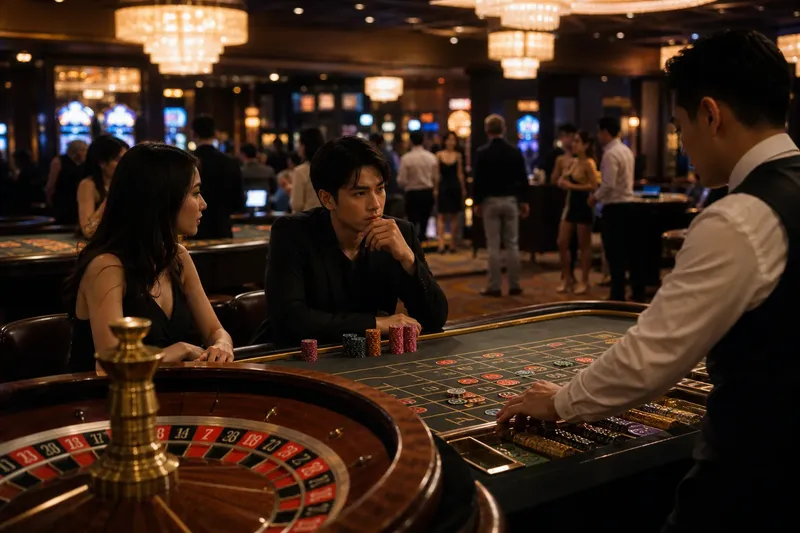
A feature film often makes a casino visit serve a larger change in the story. The scene might begin with a broad view of the room, then cut to a character’s hand, an opponent’s expression, and the moment a decision becomes visible. The edit compresses the sequence around that turn.
Sound can shape the same progression. Chips, voices, or music may move forward in the mix, while other room sounds recede. The result is a guided path through the scene: the audience is encouraged to attend to certain details before the story reveals why they matter.
Pay attention to the sequence of information. Does the film show a character’s reaction before explaining its cause? Does it hold back a face, object, or outcome? These decisions reveal how the scene manages surprise and attention.
Television casino scenes build meaning through return
A series can revisit a casino and let the audience recognize the setting. The first appearance might establish the room’s layout; a later scene can return to the same table or entrance but direct attention elsewhere. A familiar place becomes a storytelling reference, not merely a backdrop.
Recurring sound can work the same way. A musical cue may accompany an entrance in one episode, while a later visit leaves the room’s ordinary clatter more prominent. The contrast can mark a change in the scene’s emphasis without requiring the location itself to change.
But repetition does not always add new meaning. If a series keeps using the same angle, music, and blocking, the return may reinforce a familiar mood. Compare what has changed in the story and in the presentation before treating a repeated setting as a development.
How do film casino and television casino scenes differ?
Does a longer scene create more suspense?
Not by itself. A brief sequence can build anticipation through withheld information, while a longer one can let a pause or repeated action gather weight; pacing and context determine the effect.
Why do casino scenes use close-ups?
A close-up directs attention to a face, hand, or object and reduces the room’s presence in the frame. It can make a reaction easier to read or delay information about what is happening nearby.
What does ambient sound add to a casino scene?
Room sound can establish that activity continues beyond the main characters. A selective change in the mix can then shift attention toward a particular voice, gesture, or moment.
How can a series make a familiar casino feel different?
It can change what the scene emphasizes on a return: a new part of the room, a different character’s point of view, or a changed balance between music and ambient sound. The location may look familiar while its narrative purpose shifts.
Compare scenes by tracking what each one reveals
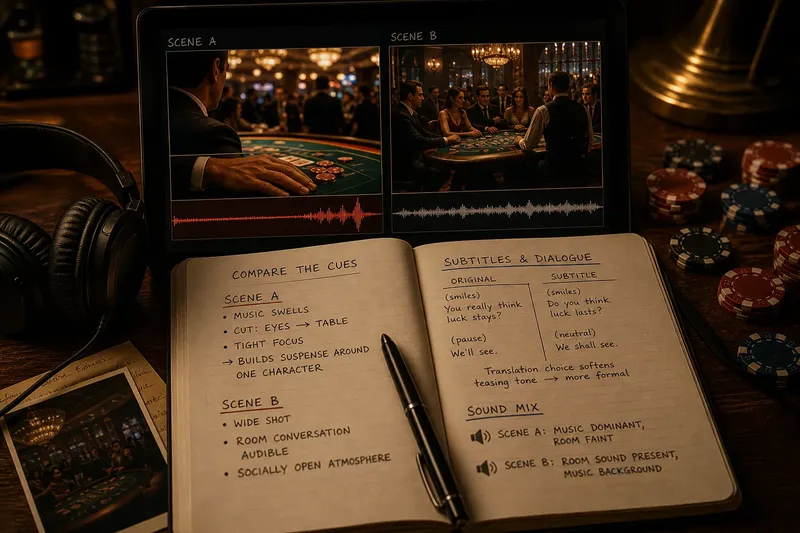
Choose a film scene and a television scene with a similar dramatic task, such as delaying a conversation or preparing for a decision. Watch once for the story, then replay the relevant moments and note the cue that directs your attention. Use each observation to choose what to inspect next:
- Shot distance: If close-ups dominate, note which faces, hands, or objects receive attention, then inspect what the frame leaves out; if wide shots dominate, identify which people or movements share the space, then check whether they affect the scene.
- Cutting rhythm: If cuts cluster around a decision, compare the details shown before and after it; if the pace remains steady, inspect a held image or pause for the scene’s change in emphasis.
- Sound: If a voice, musical cue, or room noise stands out, note when it enters and what is happening on screen; if the mix stays even, check whether framing or performance directs attention instead.
- Camera position: If the camera stays near one character, note what information that viewpoint limits; if it remains farther away, inspect which other actions become visible and decide whether they alter the scene’s meaning.
- Use of the room: If the background contains activity, check whether the characters notice or respond to it; if the room is visually quiet, inspect whether the scene relies more on dialogue, gesture, or timing.
- Return to the location: If a series repeats a composition, compare what story information is now different; if it changes the composition, identify the newly emphasized detail and decide whether it changes the viewer’s understanding.
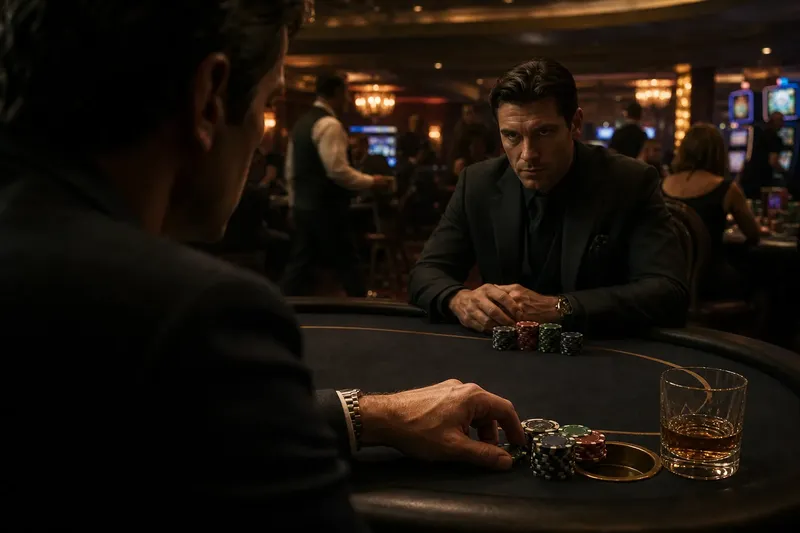
Imagine two invented scenes, each centered on a character waiting to speak to a rival. In the invented film scene, the starting point is a close view of the waiting character’s hand and the rival seated across the table. The editor cuts between them as room noise recedes and a musical pulse becomes audible; the observable result is that the exchange feels focused on the two characters, so a viewer can decide that the film is directing attention toward private tension.
In the invented television scene, the starting point is a wide view of the same kind of wait, with staff crossing the background and room clatter remaining audible. The camera holds while the rival does not yet respond; the observable result is that activity beyond the pair stays in view, so a viewer can decide that the scene emphasizes the characters’ place within a busy shared space. Neither choice describes real casino visitors; each is a way of organizing a fictional scene.
What should you notice before interpreting a scene?
How can you tell whose perspective a scene favors?
Check whose face or reaction the camera returns to, and whether the sound follows that character’s attention. If those cues do not settle the question, note what the scene leaves visible to other characters or the audience.
What should you compare when a location returns?
Compare the framing, the characters present, and the information the scene provides this time. If the visible choices stay much the same, treat the return as continuity rather than assuming it signals a new viewpoint.
How do you separate a screen cue from an interpretation?
Write down the observable cue first, such as a held shot, a cut to a hand, or a sound that grows clearer. Then describe its possible effect as an interpretation, not as a fact about the people or place represented.
Format changes how a scene controls attention
For a film casino vs. television casino comparison, start with the sequence of information: what each scene reveals, repeats, or withholds. A film may concentrate attention around one dramatic turn; a series may make a location legible through return and variation. Neither format has a fixed effect, since editing, sound, and story purpose shape the result.
Keep the distinction between observation and interpretation clear. A cut, a recurring composition, or a shift in the soundtrack is something a viewer can point to; what it means remains open to context and audience response.